
Arnout’s Car Setup Model
+Aero box solver

Arnout’s Car Setup Model
This newsletter connects to 4 step car setup system
Print this out to hang next to your PC so you can change your car setup and keep this solver close by.
btw guys, change up your setup when your car feels like it’s doing something you don’t like! Adjust it when you don’t have the desired control.
Aris says: “You can’t improve when you don’t have control.”
This system I use when I’m building setups for ACC Setup packs and il take this route when i let’s say jump into AC Evo in the future or other racing simulators
Step 1: Wing Setting
When you’re on a track with lots of corners, it’s easy to determine that you need max wing. But if there are long straights, it gets trickier.
I always recommend starting with full wing and making a nicely balanced setup for Spa.
Why Spa? It covers most car setup situations. Even though a full wing setup might not be the fastest on Spa, it’ll be your baseline understanding of your car, creating a great setup for a variety of tracks.
Once you have an 85% desired setup, take the max wing, try 50% wing, and start over through the 4 steps.
Step 2: Rake Ride Heights
As explained in the video, ride heights make the outside box.
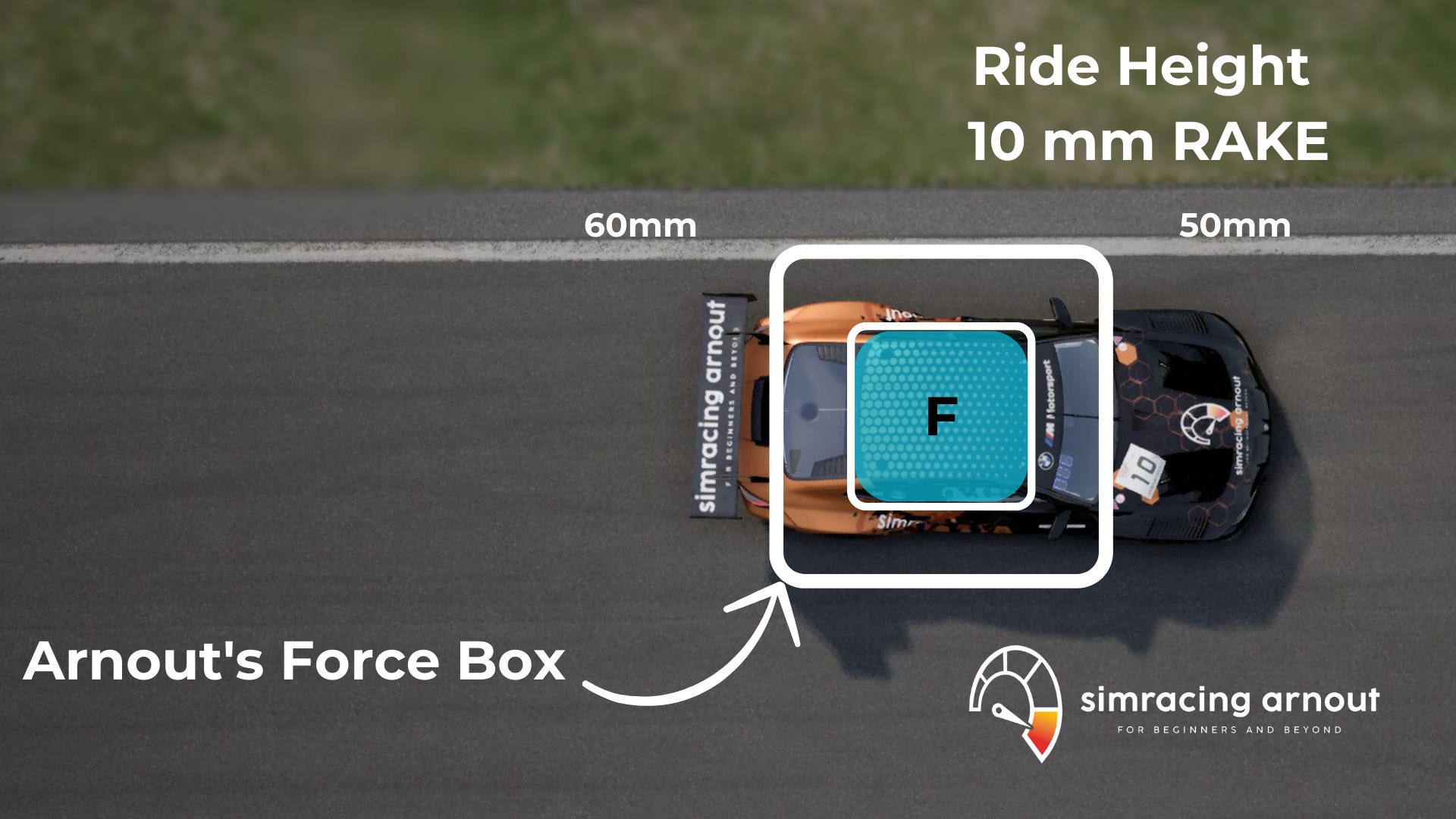
Imagine at full speed, the box is completely filled. Ride heights set the balance at top speed and during the transition from braking to throttle mid-corner.
You can overdo the rear ride height to the point where your diffuser isn’t working optimally.
If you’re too low with the front ride height, the car floor can hit the track (bottoming out).
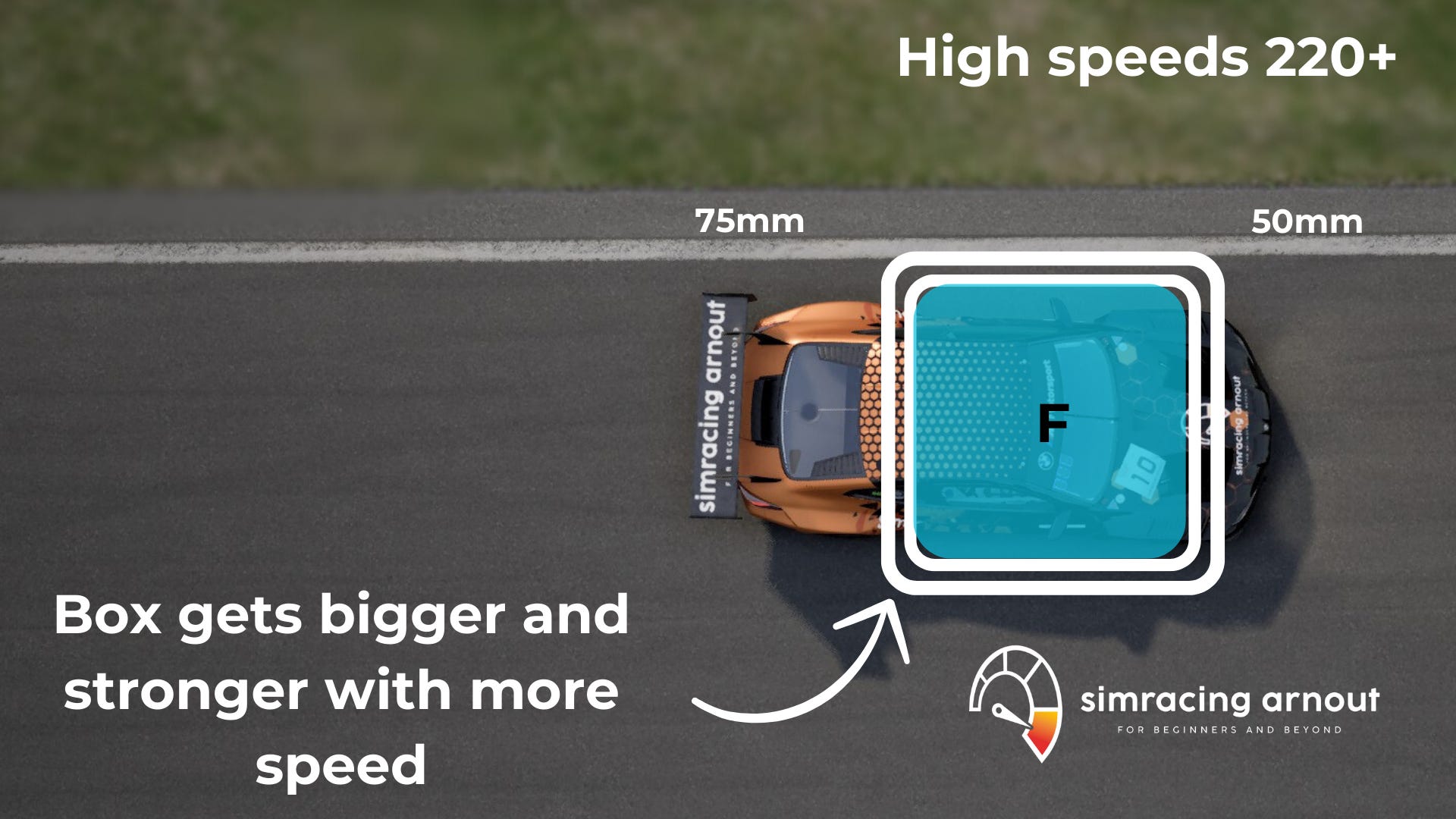
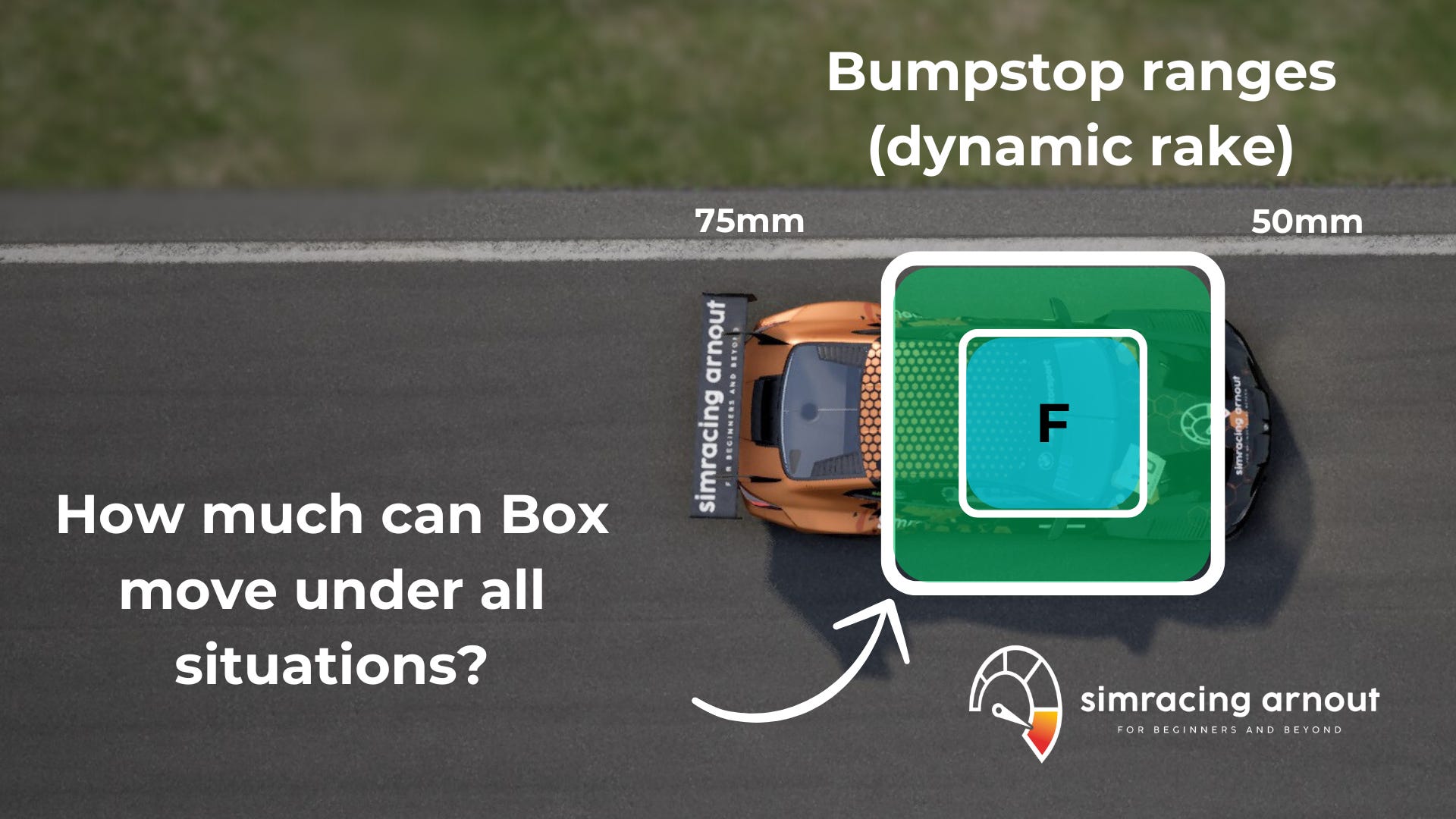
Step 3: Dynamic Rake – Spring Travel/Bumpstop Ranges
Short ranges make the setup stable.
Long ranges make it harder to drive but give you more freedom with your inputs. It might be faster, and longer ranges also give more mechanical grip.
(I’ll cover this in a future video and newsletter.)
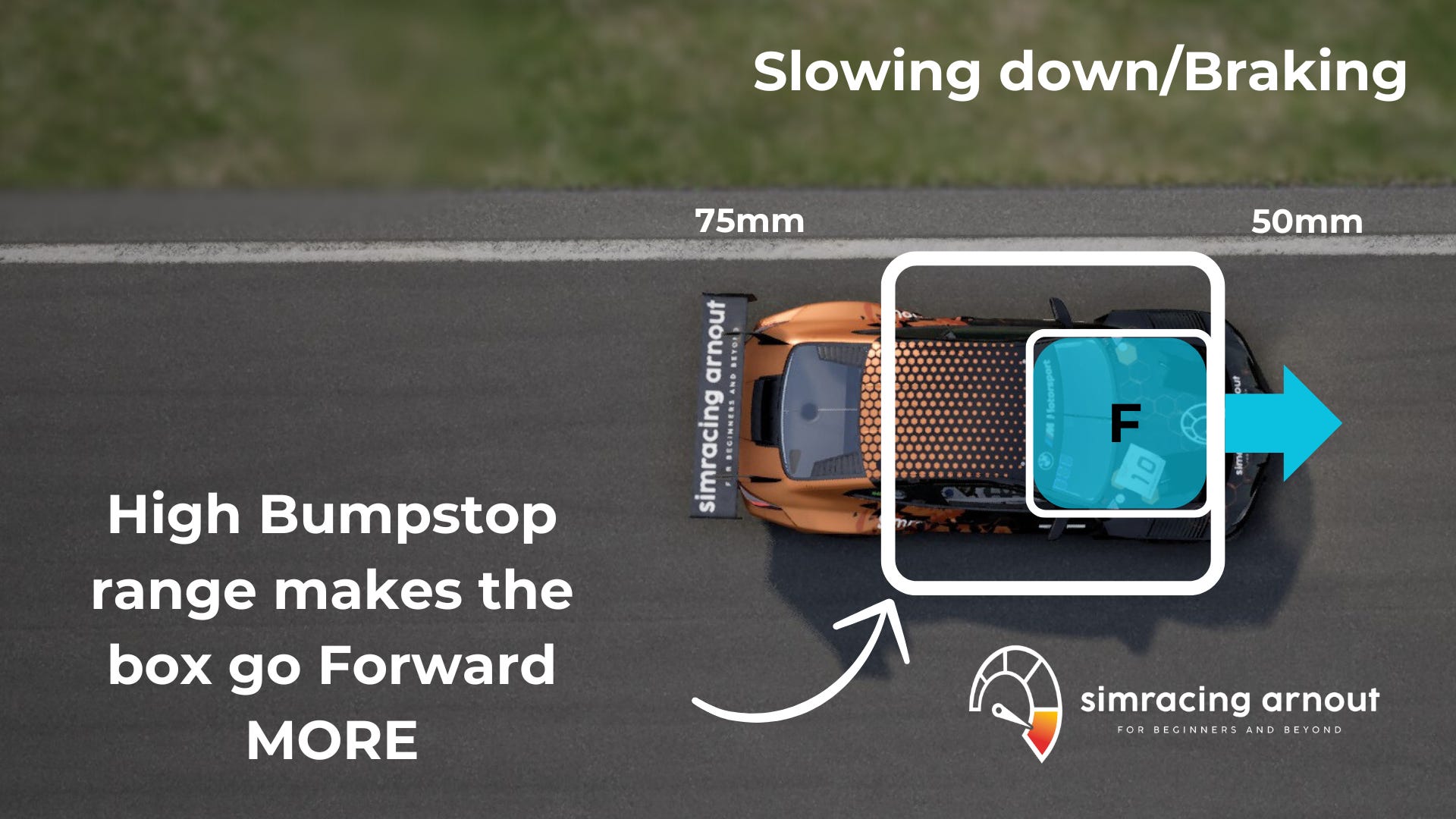
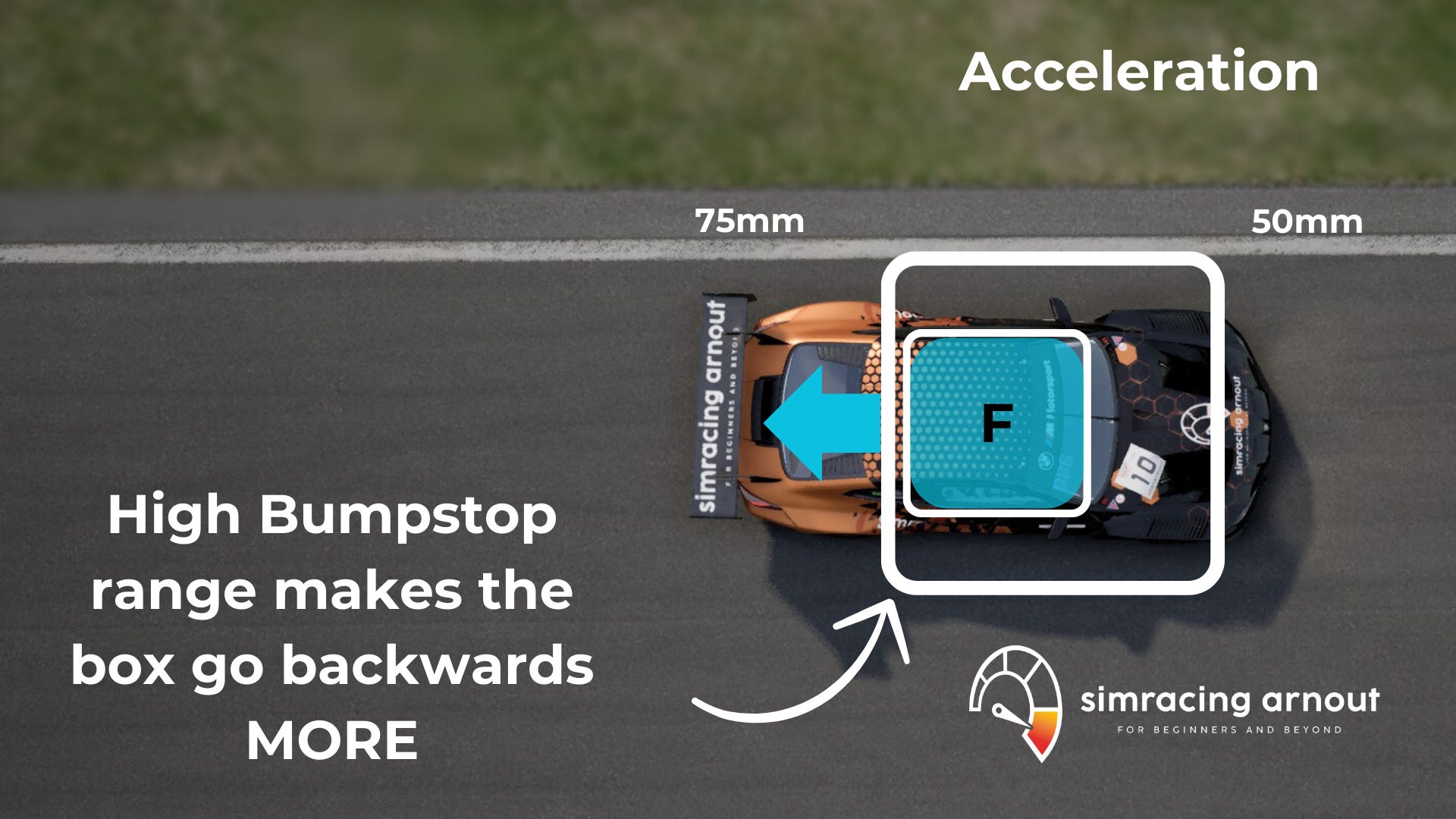
Step 4: Spring Stiffness, Wheel Rates
Look at an F1 car – it has super stiff springs, yet they do have quite a bit of travel at higher speeds.
So, imagine a track with many fast corners: it’s safe to say your ride will perform better with stiffer springs. On a track with more slow corners, a softer wheel rate setup might be more desirable.
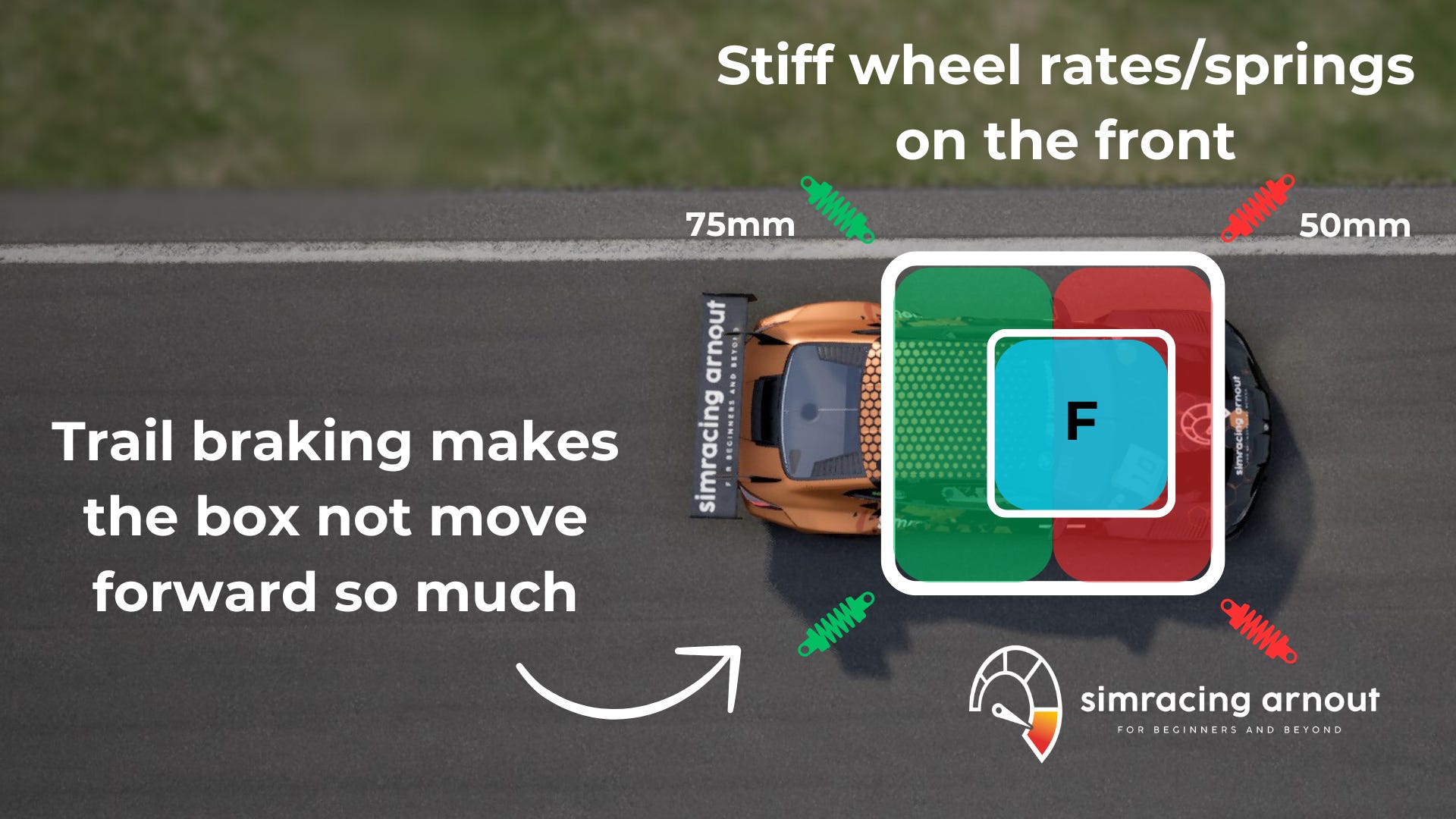
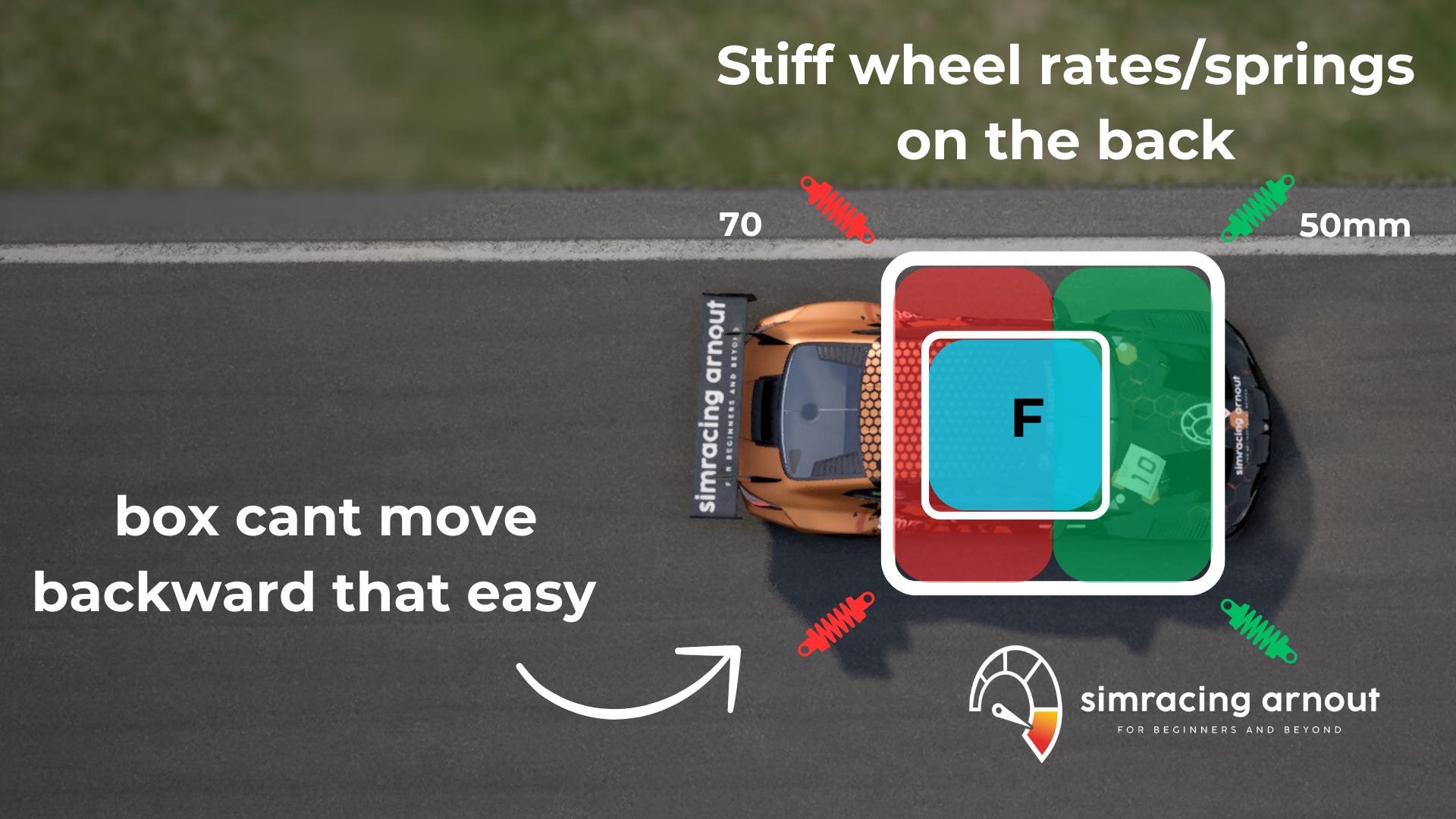
Springs set the behavior of the force box under different speed situations, but they don’t affect top-speed balance much. So, if you’re happy with the high-speed behavior but have some issues mid-track, changing wheel rates is the route I’d take.
Aerobox Solver
The goal of this solver is to find YOUR balance
Use “plus” (+) to increase, “minus” (-) to decrease.
Understeer fast corners +rear ride height (this puts the outer box more forward)
Understeer fast corners -front ride height until bottoming out
Oversteer fast corners -rear ride height (this puts the outer box backward)
Oversteer fast corners +front ride height (keep the front as low as you can)
Understeer on throttle -rear spring travel (inner box won’t move backward that much)
Understeer while braking +front spring travel (inner box will move forward more)
Oversteer on throttle +rear spring travel (inner box moves more backward)
Oversteer while braking -front spring travel (inner box will not move forward so much)
Midspeed corner problems
Oversteer while decelerating +front wheel rate/spring rate (this makes the box move forward slower, meaning there is more force required to get front grip dominance)
Oversteer when accelerating -rear wheel rate/spring rate (this makes the box go backwards more easily, creating grip on the back when going on throttle)
When you reach the lowest value, the only option is to change the other axle to its opposite.
For example, if you have oversteer while accelerating:
Understeer while decelerating -front wheel rate/spring rate (this makes the box move forward more easily, and therefore, you get more force on the front axle)
Understeer while accelerating +rear wheel rate/spring rate (this makes the box harder to travel backward, which means you have less force on the back, creating rotation)
PS. I’m doing all of this for free; to contribute to me is to give feedback so I can improve it and turn it into some kind of course in the future.
I believe with this model, everybody can understand setups, but I also believe you can use this to improve your driving in the sim, and I will also claim you can use this model to be a faster driver in real life—or at least get a deep understanding of how your inputs and setup changes affect the car.
PS. Tomorrow I go to a real racing team to get more understanding of real race cars.
cheers,
Arnout